Traumatic Brain Injuries: Understanding Toxicity from Accidents and the Power of Integrative Healing

Traumatic brain injuries, or TBIs, happen when a strong hit to the head damages the brain. These injuries often come from car crashes, sports games, or accidents at work. They can cause significant problems both immediately and over time. When the brain is injured, it triggers a chain of chemical changes that produce harmful substances in the body. This is called toxicity. It includes conditions such as excessive brain chemicals flooding cells, damage from oxygen molecules, brain swelling, and even issues between the gut and brain. If not treated well, these can lead to lasting brain damage.
This article looks at how TBIs from common accidents lead to this toxicity. It explains the steps in the body’s reaction, from the first hit to ongoing harm. Then, it covers how a team-based care plan, including experts like chiropractic nurse practitioners, can help the whole body heal naturally. By utilizing facts from scientific and health studies, we can see why early and comprehensive care is crucial for recovery.
TBIs affect millions each year in the U.S. alone. Motor vehicle accidents are a top cause, making up about half of all TBIs. In a car crash, the head can slam forward and back fast, shaking the brain inside the skull. This is called a coup-contrecoup injury. The brain hits one side of the skull, then bounces to the other. It tears tiny blood vessels and nerve fibers. Sports like football or soccer also lead to TBIs from hits or falls. Helmets help, but they don’t stop all damage. Work-related incidents, such as falls from ladders or being struck by heavy objects, also cause many TBIs, particularly in high-risk occupations like construction.
The body’s response to these injuries goes beyond the first bruise. Right after the hit, called the primary injury, cells break and blood vessels leak. However, secondary events then occur, lasting days or weeks. These include excitotoxicity, where excessive glutamate—a brain chemical—overstimulates cells and kills them. Oxidative stress occurs when harmful oxygen particles, such as free radicals, accumulate and damage proteins and DNA. Neuroinflammation occurs when the brain’s immune cells overreact, causing swelling. The gut-brain axis is also disrupted, as brain injury affects digestion and allows harmful bacteria to cause further inflammation.
To fight this, integrative care brings together different experts. Chiropractic nurse practitioners, or CNPs, play a key role. They examine the entire body, not just the head. By correcting spine alignment, they help nerves function more effectively and reduce pain. This supports natural healing without always needing drugs. Studies show that this approach can help lower long-term problems and enable people to return to their normal lives faster.
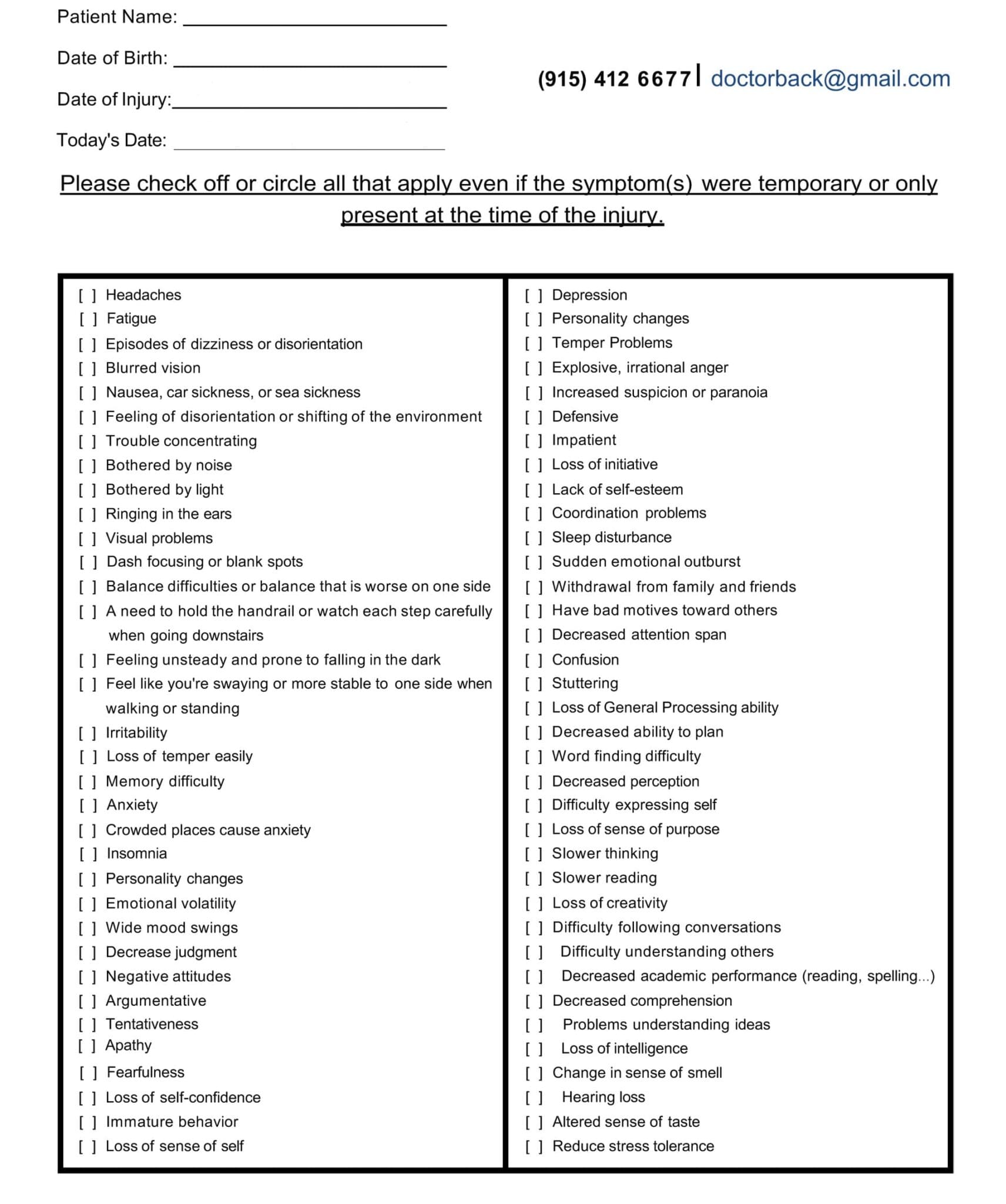
Symptom Questionnaire:
Common Causes of Traumatic Brain Injuries
TBIs can strike anyone, but certain activities raise the risk. Motor vehicle accidents are the biggest culprit. In a crash, even at low speeds, the brain can twist and stretch inside the skull. This leads to diffuse axonal injury, where nerve fibers are torn. High-speed crashes often result in more visible bruises or bleeding. According to health data, these accidents cause over 50,000 TBI deaths yearly in the U.S. Seatbelts and airbags help, but side impacts or rollovers still harm the brain.
Sports are another common source. Contact sports, such as football, hockey, or boxing, often involve head-to-head collisions. Even non-contact ones, like soccer with headers or gymnastics with falls, can cause TBIs. Repeated mild hits, called concussions, add up over time. This is seen in athletes with chronic traumatic encephalopathy, a brain disease from ongoing damage. Rules for better helmets and rest after hits aim to cut risks, but TBIs still happen.
Workplaces see many TBIs from falls, strikes by objects, or slips. Construction workers face dangers from heights or tools. Factory jobs have risks from machines. Even office settings can have slips on wet floors. Safety gear, such as hard hats, reduces the risk of injury, but not entirely. The Centers for Disease Control note that work-related TBIs lead to long absences and high medical costs.
Regardless of the cause, the injury triggers a toxic chain reaction in the body. The brain, protected by the skull and a barrier known as the blood-brain barrier, becomes overwhelmed. When this barrier breaks, harmful substances enter, starting secondary damage.
The Biochemical Cascade: How TBIs Create Toxicity
When a TBI happens, the body reacts in steps. The primary injury is the direct hit—cells die, blood vessels break, and swelling starts. But secondary events follow, creating toxicity that lasts weeks or longer. This cascade includes excitotoxicity, oxidative stress, neuroinflammation, and gut-brain axis issues. Each step builds on the last, harming cells and leading to neurodegeneration if not stopped.
Excitotoxicity is one of the primary concerns. In a healthy brain, neurotransmitters like glutamate facilitate communication between cells. However, in TBI, damaged cells release excessive glutamate. This floods nearby healthy cells, opening channels that allow calcium and sodium to enter. The cells swell and break down. Enzymes inside activate, chopping up DNA and membranes. This leads to cell death, either fast necrosis or slower apoptosis. As dying cells release more glutamate, it creates a “glutamate storm” that spreads damage (Charlie Waters Law, n.d.). Studies show glutamate levels can jump 50 times in severe TBIs, making this a key toxic event (Armstrong et al., 2023).
Next comes oxidative stress. The brain requires a significant amount of oxygen, but injury can create reactive oxygen species, or ROS—such as superoxide or hydroxyl radicals. These come from leaky mitochondria, the cell’s power plants, or activated immune cells. ROS attack lipids in cell membranes, proteins, and DNA. This causes lipid peroxidation, where fats in the brain turn into toxic aldehydes. Iron from broken blood vessels worsens it by making more ROS through reactions like the Fenton reaction. The brain has low levels of antioxidants, so damage accumulates quickly. In mouse studies, ROS levels remain high for weeks, linking to long-term issues such as Alzheimer’s (Mishra & Gazdzinski, 2025; Abdul-Muneer et al., 2015). Nrf2, a protein that fights ROS, is activated but often insufficient without additional support (Wang et al., 2022).
Neuroinflammation adds to the toxicity. The brain’s immune cells, microglia and astrocytes, activate after injury. They release cytokines such as TNF-alpha and IL-1 beta, which cause inflammation and swelling. Monocytes from the blood enter the brain through the broken blood-brain barrier, perpetuating inflammation for months. This chronic state kills neurons and blocks repair. Microglia can be helpful, clearing debris, but overactivation turns them harmful. They produce more ROS, which is linked to oxidative stress. In kids, this risk is higher due to more edema (Salehi et al., 2017). Studies show that inflammation can last for years, leading to cognitive decline (Faden et al., 2018).
The gut-brain axis disruption is a newer finding. TBI affects the gut, causing its lining to become leaky. This allows bacteria and toxins to enter the blood, causing systemic inflammation. The gut has its own “brain” of nerves that communicate with the central nervous system. Injury slows gut movement, changes the bacterial balance, and raises cytokines. This loops back, worsening brain swelling. In mice, TBI increases gut pathogens and reduces beneficial bacteria, which is linked to poorer recovery (Heuer Fischer, n.d.; Sundman et al., 2020). People with TBI often get stomach issues like ulcers, showing the two-way link.
These events disrupt the blood-brain barrier, also known as the BBB. Normally, it keeps out harm. But TBI tears it, causing edema—brain swelling. There are two types: cytotoxic, where cells swell inside, and vasogenic, where fluid leaks out. BBB break lets in immune cells and toxins, amplifying damage (Chodobski et al., 2015). If not managed, this leads to high pressure, more cell death, and neurodegeneration—slow brain breakdown over the years.
Long-Term Effects of TBI Toxicity
The toxicity from TBIs doesn’t stop soon. It can cause lasting neurodegeneration. Toxic proteins, such as tau, build up, blocking the brain’s waste removal system, the glymphatic system. This is similar to what happens in Alzheimer’s disease (Rehab Management, 2015). Free radicals and inflammation damage neurons over time, leading to memory loss, mood changes, and movement issues.
Cell damage spreads. Excitotoxicity and ROS kill neurons and glia, the support cells. Inflammation compresses brain parts, cutting blood flow. Gut issues add body-wide toxicity, raising infection risk. Without good care, this means higher chances of diseases like Parkinson’s or dementia (Mishra & Gazdzinski, 2025).
Studies in animals show that antioxidants reduce this damage. In mice, a thiol polymer cut ROS and protected cells weeks after injury (Mishra & Gazdzinski, 2025). Human data links severe TBIs to chronic problems in 80% of cases (Brett et al., 2024).
Integrative Care: Healing the Whole Body with Chiropractic Nurse Practitioners
Integrative care takes into account all aspects to combat TBI toxicity. It combines medical, physical, and natural methods. Chiropractic nurse practitioners (CNPs) play a key role. They have training in nursing and chiropractic, so they handle both symptoms and root causes. CNPs focus on the spine-brain link. Injuries often misalign the spine, blocking nerve signals and fluid flow.
CNPs use adjustments to correct subluxations, which are spine shifts. This restores cerebrospinal fluid circulation, which carries nutrients and clears waste. Blocked flow builds toxins, but fixes help brain healing (Apex Chiropractic, n.d.). They also boost blood flow, bringing oxygen to areas of the body that are damaged. This reduces fog and fatigue (Northwest Florida Physicians Group, n.d.).
The whole-body approach includes nutrition, exercise, and stress reduction. Antioxidants from food fight oxidative stress. Omega-3s lower inflammation. Physical therapy builds strength, while counseling handles mood. Integrated teams utilize cognitive therapy, massage, and acupuncture to facilitate a comprehensive recovery (Serenity Healthcare Partners, n.d.).
Dr. Alexander Jimenez, a chiropractor and nurse practitioner with over 30 years of experience, observes that TBIs require this mix. In his clinic, he utilizes functional medicine to address nutritional, hormonal, and gut health imbalances. He notes spine care resets the nervous system after crashes, cutting sympathetic stress and aiding parasympathetic healing (Sea Change Chiropractic, n.d.; Jimenez, n.d.). His work with veterans shows that chiropractic reduces the need for pain medications and speeds up recovery. Protocols like the torque release technique have been shown to improve brain function, as confirmed by EEG studies (Apex Chiropractic, n.d.).
This care helps mitigate toxicity by naturally lowering inflammation. Adjustments calm the immune response, while gut support fixes axis issues. Studies back this: EMF stimulation in animals aids pathways, similar to chiropractic’s nerve focus (Cureus, 2023). Overall, it promotes long-term health without side effects.
Conclusion
TBIs from accidents create a toxic cascade that harms the body long after the hit. Understanding excitotoxicity, oxidative stress, neuroinflammation, and gut issues helps reveal the full extent of the danger. But integrative care, led by CNPs like Dr. Jimenez, offers hope. By healing the whole body naturally, it reduces toxicity and supports recovery. Early action is key to avoiding lasting damage.
References
Abdul-Muneer, P. M., Chandra, N., & Haorah, J. (2015). Interactions of oxidative stress and neurovascular inflammation in the pathogenesis of traumatic brain injury. Molecular Neurobiology, 51(3), 966–979. https://pmc.ncbi.nlm.nih.gov/articles/PMC9001080/
Apex Chiropractic. (n.d.). How chiropractic care can treat a traumatic brain injury. https://apexchiroco.com/updates/how-chiropractic-care-can-treat-a-traumatic-brain-injury/
Armstrong, R. C., et al. (2023). Traumatic brain injury: Mechanisms, manifestations, and visual sequelae. Frontiers in Neuroscience. https://pmc.ncbi.nlm.nih.gov/articles/PMC9995859/
Brett, B. L., et al. (2024). Traumatic brain injury and neuropsychiatric consequences. Neuropsychiatry. https://pmc.ncbi.nlm.nih.gov/articles/PMC12438500/
Charlie Waters Law. (n.d.). Excitotoxicity: A secondary injury in traumatic brain damage. https://www.charliewaterslaw.com/brain-injury/excitotoxicity-a-secondary-injury-in-traumatic-brain-damage/
Chodobski, A., Zink, B. J., & Szmydynger-Chodobska, J. (2015). Blood-brain barrier pathophysiology following traumatic brain injury. In Translational research in traumatic brain injury. NCBI Bookshelf. https://www.ncbi.nlm.nih.gov/books/NBK326726/
Cureus. (2023). A swine model of traumatic brain injury: Effects of neuronally generated electromagnetic fields and electromagnetic field stimulation on traumatic brain injury-related changes. https://www.cureus.com/articles/173798-a-swine-model-of-traumatic-brain-injury-effects-of-neuronally-generated-electromagnetic-fields-and-electromagnetic-field-stimulation-on-traumatic-brain-injury-related-changes.pdf
Dr. Kal. (n.d.). Chiropractic relief for accident head injuries. https://drkal.com/chiropractic-relief-for-accident-head-injuries/
Faden, A. I., et al. (2018). Emerging roles for the immune system in traumatic brain injury. Frontiers in Immunology. https://pmc.ncbi.nlm.nih.gov/articles/PMC5137185/
Guerriero, R. M., et al. (2015). Glutamate and GABA imbalance following traumatic brain injury. Current Neurology and Neuroscience Reports. https://pmc.ncbi.nlm.nih.gov/articles/PMC4640931/
Heuer Fischer. (n.d.). TBI and gut health. https://www.heuerfischer.com/firm-overview/blog/tbi-and-gut-health/
Jimenez, A. (n.d.). Injury specialists. https://dralexjimenez.com/
Missouri S&T News. (2025). Traumatic brain injuries have toxic effects that last weeks after initial impact − an antioxidant material reduces this damage in mice. https://news.mst.edu/2025/05/traumatic-brain-injuries-have-toxic-effects-that-last-weeks-after-initial-impact-%E2%88%92-an-antioxidant-material-reduces-this-damage-in-mice/
Mishra, V., & Gazdzinski, L. (2025). Traumatic brain injuries have toxic effects that last weeks after initial impact − an antioxidant material reduces this-damage in mice. The Conversation. https://theconversation.com/traumatic-brain-injuries-have-toxic-effects-that-last-weeks-after-initial-impact-an-antioxidant-material-reduces-this-damage-in-mice-247655
Northwest Florida Physicians Group. (n.d.). Using chiropractic care to treat traumatic brain injuries. https://northwestfloridaphysiciansgroup.com/using-chiropractic-care-to-treat-traumatic-brain-injuries/
Rehab Management. (2015). Brain toxins triggered by TBI begin neurodegenerative process. https://rehabpub.com/conditions/neurological/brain-injury-neurological/brain-toxins-triggered-tbi-begin-neurodegenerative-process/
Salehi, A., et al. (2017). Response of the cerebral vasculature following traumatic brain injury. Journal of Cerebral Blood Flow & Metabolism. https://pmc.ncbi.nlm.nih.gov/articles/PMC5531360/
Sea Change Chiropractic. (n.d.). How chiropractic helps reset the nervous system after car crash trauma. https://seachangechiropractic.com/how-chiropractic-helps-reset-the-nervous-system-after-car-crash-trauma/
Serenity Healthcare Partners. (n.d.). How integrated therapies enhance recovery from traumatic brain injuries. https://www.serenityhealthcarepartners.com/how-integrated-therapies-enhance-recovery-from-traumatic-brain-injuries/
Sundman, M. H., et al. (2020). Bi-directional brain-systemic interactions and outcomes after TBI. Trends in Neurosciences. https://pmc.ncbi.nlm.nih.gov/articles/PMC8084884/
Wang, J., et al. (2022). Oxidative stress in traumatic brain injury. Antioxidants. https://pmc.ncbi.nlm.nih.gov/articles/PMC9657447/
Post Disclaimer *
General Disclaimer, Licenses and Board Certifications *
Professional Scope of Practice *
The information herein on "Understanding Toxicity from Accidents and Brain Health" is not intended to replace a one-on-one relationship with a qualified health care professional or licensed physician and is not medical advice. We encourage you to make healthcare decisions based on your research and partnership with a qualified healthcare professional.
Blog Information & Scope Discussions
Welcome to El Paso's Premier Wellness and Injury Care Clinic & Wellness Blog, where Dr. Alex Jimenez, DC, FNP-C, a Multi-State board-certified Family Practice Nurse Practitioner (FNP-BC) and Chiropractor (DC), presents insights on how our multidisciplinary team is dedicated to holistic healing and personalized care. Our practice aligns with evidence-based treatment protocols inspired by integrative medicine principles, similar to those on this site and on our family practice-based chiromed.com site, focusing on naturally restoring health for patients of all ages.
Our areas of multidisciplinary practice include Wellness & Nutrition, Chronic Pain, Personal Injury, Auto Accident Care, Work Injuries, Back Injury, Low Back Pain, Neck Pain, Migraine Headaches, Sports Injuries, Severe Sciatica, Scoliosis, Complex Herniated Discs, Fibromyalgia, Chronic Pain, Complex Injuries, Stress Management, Functional Medicine Treatments, and in-scope care protocols.
Our information scope is multidisciplinary, focusing on musculoskeletal and physical medicine; wellness; contributing etiological viscerosomatic disturbances within clinical presentations; associated somato-visceral reflex clinical dynamics; subluxation complexes; sensitive health issues; and functional medicine articles, topics, and discussions.
We provide and present clinical collaboration with specialists from various disciplines. Each specialist follows their professional scope of practice and licensure jurisdiction. We use functional health & wellness protocols to treat and support care for musculoskeletal injuries or disorders.
Our videos, posts, topics, and insights address clinical matters and issues that directly or indirectly relate to our clinical scope of practice.
Our office has made a reasonable effort to provide supportive citations and has identified relevant research studies that support our posts. We provide copies of supporting research studies upon request to regulatory boards and the public.
For further discussion on how this information relates to specific care plans or treatment protocols, please ask Dr. Alex Jimenez, DC, APRN, FNP-BC, or contact us at 915-850-0900.
We are here to help you and your family.
Blessings
Dr. Alex Jimenez DC, MSACP, APRN, FNP-BC*, CCST, IFMCP, CFMP, ATN
Email: [email protected]
Multidisciplinary Licensing & Board Certifications:
Licensed as a Doctor of Chiropractic (DC) in Texas & New Mexico*
Chiropractic Licenses:
Texas DC License #: TX5807, Verified: TX5807
New Mexico DC License #: NM-DC2182, Verified: NM-DC2182
Nurse Practitioner Licenses:
Texas APRN License #: 1191402, Verified: 1191402 *
New Mexico CNP License #: 90560, Verified 90560
Florida APRN License #: 11043890, Verified: APRN11043890 *
Colorado License #: C-APN.0105610-C-NP, Verified: C-APN.0105610-C-NP
New York License #: N25929, Verified N25929
Georgia APRN License #: GAA-NP005701
Multi-State Advanced Practice Registered Nurse (APRN*) Texas & Multi-States
Multi-state Compact APRN License by Endorsement (43 States)
Compact Status: Multi-State License: Authorized to Practice in 43 States*
Nursing Licensure Compact: Updated Here
DEA Registration: (Drug Enforcement Agency Registered)
All medical (MDs) and family practice providers (FNP-APRN) are registered and licensed to offer various levels of medication.
Verify Providers Here
License Verification Link: Nursys License Verifier
* Prescriptive Authority Authorized (DEA Registered Providers). Call if Required
Board Certification:
ANCC FNP-BC: Board Certified Nurse Practitioner*
Education:
Graduate with Honors: ICHS: MSN-FNP (Family Nurse Practitioner Program)
Degree Granted. Master's in Family Practice, MSN Diploma (Cum Laude)
Dr. Alex Jimenez, DC, APRN, FNP-BC*, CFMP, IFMCP, ATN, CCST
(Board Certified: Family Practice Nurse Practitioner—Multistate)*
(Licensed Nurse Practitioner & Chiropractor - Multistate)*
Clinical Director
DC & FNP License (Review Above)
Digital Business Card
NPI: 1205907805
Dr. Maria Cardenas, MD
(Board Certified: Internal Medicine)
(Licensed Medical Doctor)
Medical Director, Clinical Director & Collaborative Physician
NPI # 1164426748
MD License #: J2933
Licenses and Board Certifications:
MD: Medical Doctor
DC: Doctor of Chiropractic
APRNP: Advanced Practice Registered Nurse
FNP-BC: Family Practice Specialization (Multi-State Board Certified)
FNP-BC: Family Practice Across Life Span (Neonatal to Geriatrics)
RN: Registered Nurse (Multi-State Compact License)
CFMP: Certified Functional Medicine Provider
MSN-FNP: Master of Science in Family Practice Medicine
MSACP: Master of Science in Advanced Clinical Practice
IFMCP: Institute of Functional Medicine
CCST: Certified Chiropractic Spinal Trauma
ATN: Advanced Translational Neutrogenomics
Family with Primary Care Focus (Family Nurse Practitioner or FNP)
- The Family Nurse Practitioner (FNP) promotes, maintains, and restores health for individuals and families across the lifespan. FNPs also identify health risks, promote wellness, and diagnose and manage acute and chronic illness.
- The FNP focuses on comprehensive primary care, promoting healthy lifestyles for patients across the lifespan in settings such as private practice, physician offices, and community health centers.
Memberships & Associations:
TCA: Texas Chiropractic Association: Member ID: 104311
TNA: Texas Nurse Association: Member ID: 06458222
TNP: Texas Nurse Practitioner Association ID: 2025091511
AANP: American Association of Nurse Practitioners: Member ID: 2198960
ANA: American Nurses Association: Member ID: 06458222 (District TX01)
| Primary Taxonomy | Selected Taxonomy | State | License Number |
|---|---|---|---|
| No | 111N00000X - Chiropractor | NM | DC2182 |
| Yes | 111N00000X - Chiropractor | TX | DC5807 |
| Yes | 363LF0000X - Nurse Practitioner - Family | TX | 1191402 |
| Yes | 363LF0000X - Nurse Practitioner - Family | FL | 11043890 |
| Yes | 363LF0000X - Nurse Practitioner - Family | CO | C-APN.0105610-C-NP |
| Yes | 363LF0000X - Nurse Practitioner - Family | NY | N25929 |
| Yes | 363LF0000X - Nurse Practitioner - Family | NM |
90560 |
| Yes | 363LF0000X - Nurse Practitioner - Family | GA | GAA-NP005701 |
Dr. Alex Jimenez, DC, APRN, FNP-BC*, CFMP, IFMCP, ATN, CCST
(Board Certified: Family Practice Nurse Practitioner—Multistate)*
(Primary Care Across Lifespan—Neonatal / Pediatric / Adult / Geriatrics)
(Licensed Nurse Practitioner & Chiropractor - Multistate)*
Clinical Director
Digital Business Card
NPI: 1205907805
Dr. Maria Cardenas, MD
(Board Certified: Internal Medicine)*
(Licensed Medical Doctor)*
Medical Director, Clinical Director & Collaborative Physician
NPI # 1164426748
MD License #: J2933
📆 Schedule Appointment: Schedule 24/7 (Click Here)