Load Tolerance and Functional Movement Deficits Quantified After I-10 Rear-End Trauma
Abstract
Rear-end collisions on busy corridors like El Paso’s I-10 transfer sudden forces through the spine and supporting soft tissues, often producing measurable losses in load tolerance and functional movement that persist long after the crash. These deficits appear as restricted digital range-of-motion values, failed movement screens, and “duties under duress” that limit work, household tasks, and daily activity. When quantified with prescription-style screens and linked to AMA Guides methodology, the data supply objective evidence of special damages and support Colossus-compliant records. At Injury Medical Clinic PA, the dual-licensed team of Dr. Alex Jimenez, DC, APRN, FNP-BC, and collaborating internist Dr. Maria Guadalupe Cardenas, MD, uses non-invasive tools—chiropractic alignment, neurofunctional acupuncture/electroacupuncture, targeted peptide support, and extracorporeal shockwave therapy (ESWT)—to restore capacity while patients remain informed decision-makers working with their primary-care physicians. The resulting functional metrics help establish clinical and proximate causation in personal injury cases (see https://dralexjimenez.com).
Picture a routine afternoon commute on Interstate 10 east of El Paso
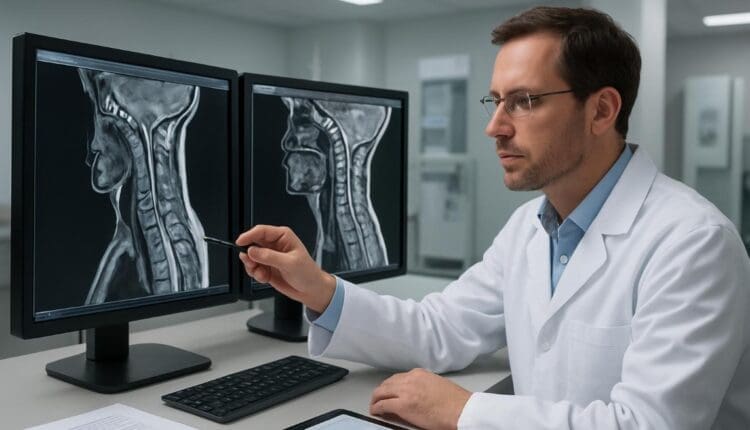
Traffic is moving at highway speed when a vehicle ahead brakes. The following car strikes the rear bumper. In a fraction of a second, the struck vehicle accelerates forward while the occupant’s head lags behind, creating the classic S-shaped cervical deformation described in biomechanical literature (Siegmund, 2002). Lower-body forces can also appear: compressive and tensile loads through the femurs and pelvis as the seatpan and seatback interact with the body (Explico research summaries on moderate-to-high-speed rear impacts). The crash may cause little visible vehicle damage, yet the occupant may later report neck pain, mid-back stiffness, low-back soreness that flares when lifting, and difficulty turning the head to check a blind spot. These are not vague complaints. These early signs of reduced load tolerance and functional movement deficits can be measured, tracked, and presented as objective activity-limitation data.
Personal injury attorneys in El Paso and across the region need precisely this kind of documentation. Special damages calculations, Colossus scoring, and future-care projections rest on clear evidence that the trauma produced measurable limitations in what the patient can safely do at work and at home. The multidisciplinary clinic approach supplies that evidence while centering three bioethical pillars: beneficence (restoring actual functional capacity), non-maleficence (favoring active, non-invasive recovery over early opioid or surgical dependency), and autonomy (patients co-design the movement prescription and share progress with their existing medical team).
How Rear-End Forces Produce Measurable Functional Deficits
In a typical rear impact, the pelvis and torso accelerate forward first. Because of its inertia, the head translates rearward relative to the torso, loading the cervical facet capsules in shear and tension (Siegmund, 2002). Finite-element models show that higher delta-V and certain initial postures increase tensile strain in the C2–C3 and C4–C5 facet capsules (ASME Journal of Medical Diagnostics, 2026 modeling). Even when peak accelerations stay below dangerous levels, soft-tissue strain can cause stiffness, changes in muscle activation, and reduced tolerance for long-term loading.
Patients commonly describe three practical consequences:
- Reduced ability to hold or carry moderate loads without mid-back or low-back flare.
- Limited cervical rotation that interferes with driving and overhead work.
- Fatigue that appears earlier during repeated bending, reaching, or standing.
These are functional movement deficits, not merely “pain scores.” Digital range-of-motion systems capture the numbers: degrees of cervical flexion, extension, and rotation compared with age- and sex-matched norms or with the patient’s own pre-injury baseline when available. Prescription-style movement screens then test load-bearing patterns—squat mechanics, single-leg balance, loaded carry form, and reach capacity—under controlled conditions. When a screen shows that a patient can lift a 20-pound box from floor to waist only three times before compensatory trunk lean and pain appear, that observation documents a duty-under-duress limitation rather than a complete inability to work.
Quantifying Limitations for Attorneys: Screens, Digital ROM, and AMA Guides Linkage
Attorneys evaluating special damages need numbers that survive defense scrutiny. Digital ROM devices produce time-stamped printouts with reliability checks (three consecutive trials within acceptable variance). Movement screens generate structured notes that list the exact task, load, repetitions completed, and observable compensations. Together they create a longitudinal record: baseline deficit, response to care, and residual capacity at maximum medical improvement.
These data map onto the AMA Guides framework. The AMA Guides uses range-of-motion loss both as a physical-examination modifier in diagnosis-based impairment and, in selected cases, as a primary rating method when it better reflects the patient’s functional loss (AMA Guides, Sixth Edition updates). A documented cervical rotation deficit of 20–30 degrees below normal, paired with failed loaded-carry tolerance, supports a clear impairment class and grade. The same records list specific duties under duress—continuing warehouse lifting with lumbar pain, driving with restricted head turning, and performing household chores only with frequent rest—so that Colossus-style systems can score the functional impact rather than discount vague narrative statements (settlement-intelligence summaries on duties under duress).
Future-care projections follow the same metrics. When screens show that load tolerance improves with progressive exercise but plateaus without adjunctive tissue support, the clinic can outline a defined course of targeted peptide protocols and ESWT sessions. ESWT delivers focused acoustic energy intended to stimulate local circulation and collagen remodeling in chronic soft-tissue sites; early sports-medicine consensus statements list selected tendinopathies and bone-stress conditions among possible indications (PhysioTutors Delphi summary, 2026). Peptide support is discussed only as an adjunct within a broader plan of alignment, movement retraining, and medical monitoring, never as a stand-alone cure. The projected visits, sessions, and expected capacity gains become the basis for future medical expenses that attorneys can present with the same objective data used for past damages.
The Clinic’s Integrated Pathway: Restoring Capacity Without Creating Dependency
At Injury Medical Clinic PA, the evaluation begins with a dual-scope assessment. Dr. Alex Jimenez, DC, APRN, FNP-BC, CFMP, IFMCP (Texas License #1191402, Prescriptive Authority #59628, NPI 1205907805), combines chiropractic structural examination with advanced-practice medical diagnostics. Collaborating physician Dr. Maria Guadalupe Cardenas, MD (Texas License #J2933, NPI 1164426748), provides internal medicine direction for comorbidities, laboratory interpretation, and risk stratification. We perform digital ROM and movement screens early and repeat them at intervals to measure progress.
Care itself stays non-invasive and active. Spinal adjustments and soft-tissue work address mechanical restrictions. We apply neurofunctional acupuncture and electroacupuncture along meridian and segmental patterns to modulate pain signaling and support motor control. When indicated, we add Class IV laser, mechanical therapy, and ESWT. We consider targeted peptide protocols only after laboratory and clinical review and coordinate them with the patient’s primary-care physician. Throughout, the patient co-designs the home movement prescription—specific carries, mobility drills, and load progressions—and receives written progress summaries that can be shared with outside providers. The goal is restored functional capacity, not indefinite passive treatment.
This approach embodies the bioethical roadmap:
- Beneficence is measured by the same screens that documented the deficit: increased repetitions under load, improved digital ROM, and reduced duties-under-duress frequency.
- Non-maleficence is served by prioritizing active recovery and avoiding early reliance on long-term medication or surgical pathways when objective data show that conservative measures are producing measurable gains.
- Autonomy is protected by transparent education and shared decision-making; patients remain the informed decision-makers and retain seamless coordination with their existing medical team.
Linking Functional Metrics to Medical-Legal Causation
Objective movement and load-tolerance data close the causal chain. The biomechanics of the I-10 rear-end impact explain how rapid acceleration produced the soft-tissue strain. Digital ROM and screen findings document the resulting structural and functional impairment. Serial measurements show that the limitations improve or stabilize only with the specific interventions provided. When these elements appear in Colossus-compliant electronic notes and are cross-referenced to AMA Guides methodology, they provide the clinical and proximate-causation evidence required in personal injury litigation. The functional metrics support establishing medical-legal causation in personal injury at https://dralexjimenez.com.
Attorneys receive clear, longitudinal records rather than narrative summaries. Patients regain measurable capacity while retaining control of their care plan. The same numbers that quantify the injury also quantify the recovery.
Feeling Better Than Ever After a Semi-Truck Accident | El Paso, TX
References
Siegmund, G. P. (2002). The biomechanics of whiplash injury. British Columbia Medical Journal, 44(5), 243–247. https://bcmj.org/articles/biomechanics-whiplash-injury
American Medical Association. (2025). AMA guides to the evaluation of permanent impairment (6th ed.). American Medical Association. https://ama-guides.ama-assn.org
Explico. (n.d.). Characterization of occupant lower extremity behavior during moderate-to-high speed rear impacts. https://explico.com/research-projects/lower-extremity-injury-during-rear-end-collisions
PhysioTutors. (2026). Extracorporeal shockwave therapy: Delphi recommendations. https://www.physiotutors.com/research/extracorporeal-shockwave-therapy-in-sports-medicine/
Jimenez, A. (n.d.). Personal injury & accident resources. Dr. Alex Jimenez. https://dralexjimenez.com
Post Disclaimer *
General Disclaimer, Licenses and Board Certifications *
Professional Scope of Practice *
The information herein on "I-10 Rear-End Trauma Deficits: Understanding the Damage" is not intended to replace a one-on-one relationship with a qualified health care professional or licensed physician and is not medical advice. We encourage you to make healthcare decisions based on your research and partnership with a qualified healthcare professional.
Blog Information & Scope Discussions
Welcome to El Paso's Premier Wellness and Injury Care Clinic & Wellness Blog, where Dr. Alex Jimenez, DC, FNP-C, a Multi-State board-certified Family Practice Nurse Practitioner (FNP-BC) and Chiropractor (DC), presents insights on how our multidisciplinary team is dedicated to holistic healing and personalized care. Our practice aligns with evidence-based treatment protocols inspired by integrative medicine principles, similar to those on this site and on our family practice-based chiromed.com site, focusing on naturally restoring health for patients of all ages.
Our areas of multidisciplinary practice include Wellness & Nutrition, Chronic Pain, Personal Injury, Auto Accident Care, Work Injuries, Back Injury, Low Back Pain, Neck Pain, Migraine Headaches, Sports Injuries, Severe Sciatica, Scoliosis, Complex Herniated Discs, Fibromyalgia, Chronic Pain, Complex Injuries, Stress Management, Functional Medicine Treatments, and in-scope care protocols.
Our information scope is multidisciplinary, focusing on musculoskeletal and physical medicine; wellness; contributing etiological viscerosomatic disturbances within clinical presentations; associated somato-visceral reflex clinical dynamics; subluxation complexes; sensitive health issues; and functional medicine articles, topics, and discussions.
We provide and present clinical collaboration with specialists from various disciplines. Each specialist follows their professional scope of practice and licensure jurisdiction. We use functional health & wellness protocols to treat and support care for musculoskeletal injuries or disorders.
Our videos, posts, topics, and insights address clinical matters and issues that directly or indirectly relate to our clinical scope of practice.
Our office has made a reasonable effort to provide supportive citations and has identified relevant research studies that support our posts. We provide copies of supporting research studies upon request to regulatory boards and the public.
For further discussion on how this information relates to specific care plans or treatment protocols, please ask Dr. Alex Jimenez, DC, APRN, FNP-BC, or contact us at 915-850-0900.
We are here to help you and your family.
Blessings
Dr. Alex Jimenez DC, MSACP, APRN, FNP-BC*, CCST, IFMCP, CFMP, ATN
Email: [email protected]
Multidisciplinary Licensing & Board Certifications:
Licensed as a Doctor of Chiropractic (DC) in Texas & New Mexico*
Chiropractic Licenses:
Texas DC License #: TX5807, Verified: TX5807
New Mexico DC License #: NM-DC2182, Verified: NM-DC2182
Nurse Practitioner Licenses:
Texas APRN License #: 1191402, Verified: 1191402 *
New Mexico CNP License #: 90560, Verified 90560
Florida APRN License #: 11043890, Verified: APRN11043890 *
Colorado License #: C-APN.0105610-C-NP, Verified: C-APN.0105610-C-NP
New York License #: N25929, Verified N25929
Georgia APRN License #: GAA-NP005701
Multi-State Advanced Practice Registered Nurse (APRN*) Texas & Multi-States
Multi-state Compact APRN License by Endorsement (43 States)
Compact Status: Multi-State License: Authorized to Practice in 43 States*
Nursing Licensure Compact: Updated Here
DEA Registration: (Drug Enforcement Agency Registered)
All medical (MDs) and family practice providers (FNP-APRN) are registered and licensed to offer various levels of medication.
Verify Providers Here
License Verification Link: Nursys License Verifier
* Prescriptive Authority Authorized (DEA Registered Providers). Call if Required
Board Certification:
ANCC FNP-BC: Board Certified Nurse Practitioner*
Education:
Graduate with Honors: ICHS: MSN-FNP (Family Nurse Practitioner Program)
Degree Granted. Master's in Family Practice, MSN Diploma (Cum Laude)
Dr. Alex Jimenez, DC, APRN, FNP-BC*, CFMP, IFMCP, ATN, CCST
(Board Certified: Family Practice Nurse Practitioner—Multistate)*
(Licensed Nurse Practitioner & Chiropractor - Multistate)*
Clinical Director
DC & FNP License (Review Above)
Digital Business Card
NPI: 1205907805
Dr. Maria Cardenas, MD
(Board Certified: Internal Medicine)
(Licensed Medical Doctor)
Medical Director, Clinical Director & Collaborative Physician
NPI # 1164426748
MD License #: J2933
Licenses and Board Certifications:
MD: Medical Doctor
DC: Doctor of Chiropractic
APRNP: Advanced Practice Registered Nurse
FNP-BC: Family Practice Specialization (Multi-State Board Certified)
FNP-BC: Family Practice Across Life Span (Neonatal to Geriatrics)
RN: Registered Nurse (Multi-State Compact License)
CFMP: Certified Functional Medicine Provider
MSN-FNP: Master of Science in Family Practice Medicine
MSACP: Master of Science in Advanced Clinical Practice
IFMCP: Institute of Functional Medicine
CCST: Certified Chiropractic Spinal Trauma
ATN: Advanced Translational Neutrogenomics
Family with Primary Care Focus (Family Nurse Practitioner or FNP)
- The Family Nurse Practitioner (FNP) promotes, maintains, and restores health for individuals and families across the lifespan. FNPs also identify health risks, promote wellness, and diagnose and manage acute and chronic illness.
- The FNP focuses on comprehensive primary care, promoting healthy lifestyles for patients across the lifespan in settings such as private practice, physician offices, and community health centers.
Memberships & Associations:
TCA: Texas Chiropractic Association: Member ID: 104311
TNA: Texas Nurse Association: Member ID: 06458222
TNP: Texas Nurse Practitioner Association ID: 2025091511
AANP: American Association of Nurse Practitioners: Member ID: 2198960
ANA: American Nurses Association: Member ID: 06458222 (District TX01)
| Primary Taxonomy | Selected Taxonomy | State | License Number |
|---|---|---|---|
| No | 111N00000X - Chiropractor | NM | DC2182 |
| Yes | 111N00000X - Chiropractor | TX | DC5807 |
| Yes | 363LF0000X - Nurse Practitioner - Family | TX | 1191402 |
| Yes | 363LF0000X - Nurse Practitioner - Family | FL | 11043890 |
| Yes | 363LF0000X - Nurse Practitioner - Family | CO | C-APN.0105610-C-NP |
| Yes | 363LF0000X - Nurse Practitioner - Family | NY | N25929 |
| Yes | 363LF0000X - Nurse Practitioner - Family | NM |
90560 |
| Yes | 363LF0000X - Nurse Practitioner - Family | GA | GAA-NP005701 |
Dr. Alex Jimenez, DC, APRN, FNP-BC*, CFMP, IFMCP, ATN, CCST
(Board Certified: Family Practice Nurse Practitioner—Multistate)*
(Primary Care Across Lifespan—Neonatal / Pediatric / Adult / Geriatrics)
(Licensed Nurse Practitioner & Chiropractor - Multistate)*
Clinical Director
Digital Business Card
NPI: 1205907805
Dr. Maria Cardenas, MD
(Board Certified: Internal Medicine)*
(Licensed Medical Doctor)*
Medical Director, Clinical Director & Collaborative Physician
NPI # 1164426748
MD License #: J2933
📆 Schedule Appointment: Schedule 24/7 (Click Here)