Understanding traumatic brain injury is crucial for recovery and support. Learn about its causes and effects.
A traumatic brain injury (TBI) occurs when the brain is damaged by a violent blow or shock to the head. It has the power to alter one’s thoughts, behavior, and emotions. This page provides a straightforward explanation of TBI, including its origins, signs, and physiological impacts. Additionally, it demonstrates how nurse practitioners and chiropractors may collaborate to promote healing (Mayo Clinic, 2023; Cleveland Clinic, 2023).
A traumatic brain injury occurs when the brain is damaged by an external factor. Although the brain is protected by the skull, internal injuries may still occur after a severe blow. TBI may be severe, resulting in a prolonged coma or disability, or minor, similar to a concussion. Each year, millions of individuals suffer traumatic brain injury (TBI) from sports, auto accidents, or falls (Mayo Clinic, 2023). All of our actions are controlled by the brain. Issues may arise immediately after injury or weeks later. Early intervention is crucial (Cleveland Clinic, 2023).
TBI starts with a strong force to the head or body. Here are the main causes:
Even a small bump can cause mild TBI if the brain moves rapidly within the skull (Hicks et al., 2020).
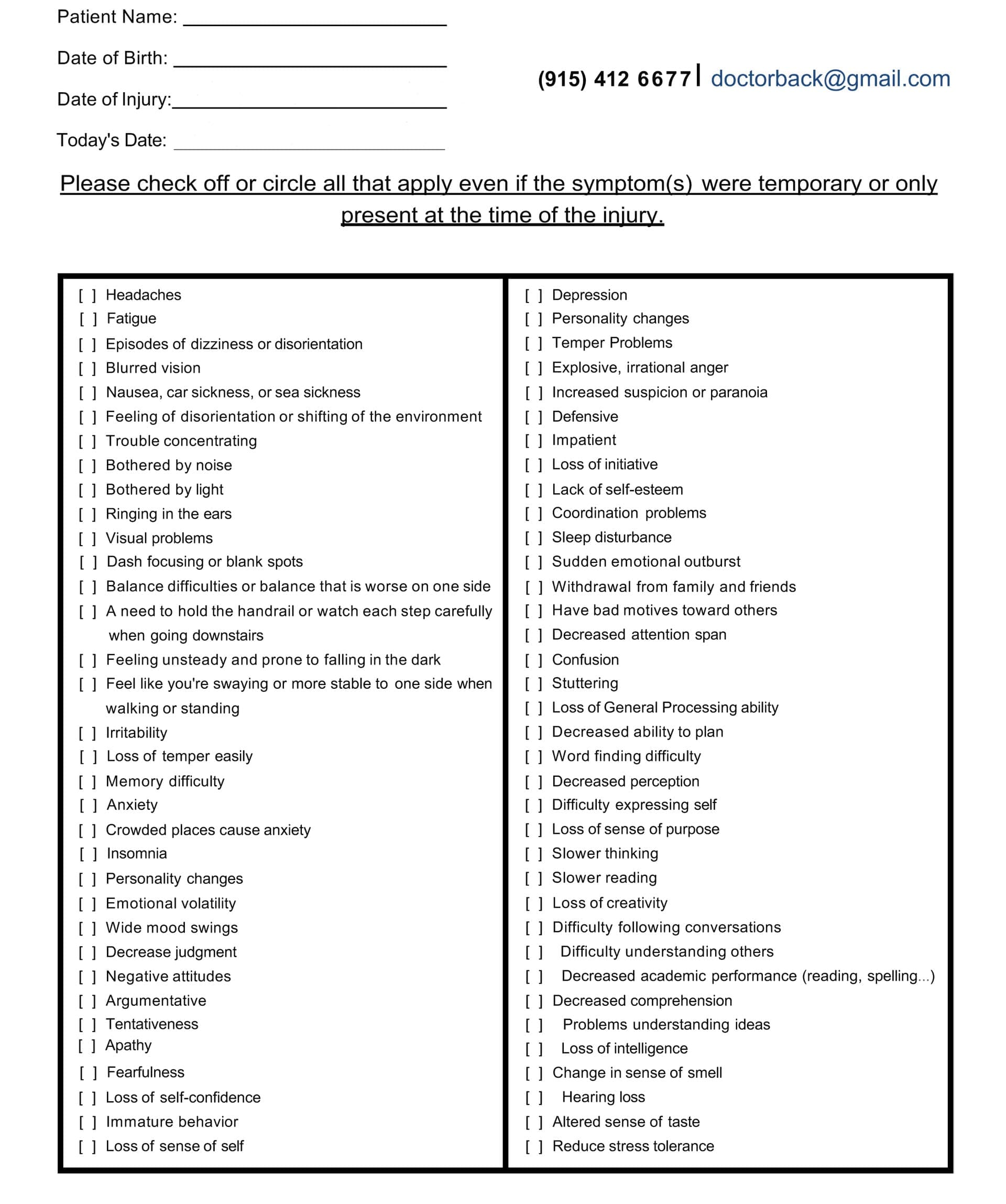
Symptoms depend on the severity of the injury. They can appear in the body, mind, or feelings.
A chiropractor or nurse practitioner can find hidden signs by asking detailed questions about the accident and daily life (Jimenez, n.d.-a).
The musculoskeletal system includes muscles, bones, and joints. TBI often hurts this system because the force hits the whole body.
Spinal misalignment can press on nerves and slow healing. Chiropractors check the spine with gentle tests to spot these issues (Jimenez, n.d.-b).
The neurological system is the brain, spinal cord, and nerves. TBI directly damages this network.
Questioning reveals whether light bothers the eyes or whether noise causes headaches—clues to nerve irritation (Silverberg et al., 2018).
TBI can reach organs far from the brain through swelling and stress.
A nurse practitioner orders blood tests to check organ health and adjust care (Jimenez, n.d.-c).
Good questions act like a map to hidden TBI effects. A chiropractor or nurse practitioner asks:
These answers guide exams. Gentle spine checks show tight muscles. Balance tests reveal wobbly steps. The provider connects dots between the brain, spine, and organs (Jimenez, n.d.-a; Haider et al., 2018).
Eyes and brain work as a team. TBI breaks the link.
Simple eye tests in the office spot these issues early (Green et al., 2010).
Immediately after a TBI, nausea is typical. If the vagus nerve is agitated, it may persist. Patients may have reflux or feel full too quickly. The nurse practitioner may recommend soft meals based on a thorough diet history (Blyth & Bazarian, 2010).
The brain’s processing speed is slowed by mild TBI. A page takes longer to read. Finding words seems difficult. For new information, memory lapses. Cognitive assessments follow progress and gauge the gap (McInnes et al., 2017).
Normal lights and noises might cause agony for those who have photophobia or phonophobia. Overactive brain circuits are the cause. While treatment helps reduce nerve pain over time, dark glasses and quiet spaces are helpful in the short term (Silverberg et al., 2018).
Sleep heals the brain. TBI breaks the sleep cycle.
Poor sleep slows recovery. A sleep diary guides the care plan (Wickwire et al., 2018).
Integrative care requires teamwork. The body’s structure and nerves are fixed via chiropractic therapy. When providing treatment, nurse practitioners consider the whole scope of health. They reduce setbacks and hasten recovery when combined (Jimenez, n.d.-d; Gardner & Yaffe, 2015).
Chiropractors use hands-on methods:
These steps improve brain signals and reduce pain without drugs (Coronado et al., 2015).
The nurse practitioner:
A full plan blends body, mind, and lifestyle.
Patients track symptoms in a simple journal. The team reviews progress every two weeks (Jimenez, n.d.-e; Cnossen et al., 2017).
Dr. Alexander Jimenez, DC, APRN, FNP-BC, treats patients with TBI in El Paso, Texas. He notices:
His dual training lets him spot both spine and medical red flags fast.
With the right plan, most people with mild TBI will feel better in a few months. Moderate to severe cases require extended care, yet continue to show improvement. Staying on the integrative path increases the likelihood of complete functionality (Maas et al., 2017).
Traumatic brain injury affects every part of life, from mood to muscles. The first step is to learn about the causes and symptoms. A detailed history can reveal hidden effects on the nerves, muscles, and organs. Chiropractic adjustments, soft-tissue work, and exercises help the body return to its former state. Nurse practitioners use their medical knowledge to protect people’s health. This all-encompassing, integrative plan helps patients get back to enjoying life every day.
General Disclaimer, Licenses and Board Certifications *
Professional Scope of Practice *
The information herein on "Traumatic Brain Injury: Causes, Symptoms, and Care" is not intended to replace a one-on-one relationship with a qualified health care professional or licensed physician and is not medical advice. We encourage you to make healthcare decisions based on your research and partnership with a qualified healthcare professional.
Blog Information & Scope Discussions
Welcome to El Paso's Premier Wellness and Injury Care Clinic & Wellness Blog, where Dr. Alex Jimenez, DC, FNP-C, a Multi-State board-certified Family Practice Nurse Practitioner (FNP-BC) and Chiropractor (DC), presents insights on how our multidisciplinary team is dedicated to holistic healing and personalized care. Our practice aligns with evidence-based treatment protocols inspired by integrative medicine principles, similar to those on this site and on our family practice-based chiromed.com site, focusing on naturally restoring health for patients of all ages.
Our areas of multidisciplinary practice include Wellness & Nutrition, Chronic Pain, Personal Injury, Auto Accident Care, Work Injuries, Back Injury, Low Back Pain, Neck Pain, Migraine Headaches, Sports Injuries, Severe Sciatica, Scoliosis, Complex Herniated Discs, Fibromyalgia, Chronic Pain, Complex Injuries, Stress Management, Functional Medicine Treatments, and in-scope care protocols.
Our information scope is multidisciplinary, focusing on musculoskeletal and physical medicine; wellness; contributing etiological viscerosomatic disturbances within clinical presentations; associated somato-visceral reflex clinical dynamics; subluxation complexes; sensitive health issues; and functional medicine articles, topics, and discussions.
We provide and present clinical collaboration with specialists from various disciplines. Each specialist follows their professional scope of practice and licensure jurisdiction. We use functional health & wellness protocols to treat and support care for musculoskeletal injuries or disorders.
Our videos, posts, topics, and insights address clinical matters and issues that directly or indirectly relate to our clinical scope of practice.
Our office has made a reasonable effort to provide supportive citations and has identified relevant research studies that support our posts. We provide copies of supporting research studies upon request to regulatory boards and the public.
For further discussion on how this information relates to specific care plans or treatment protocols, please ask Dr. Alex Jimenez, DC, APRN, FNP-BC, or contact us at 915-850-0900.
We are here to help you and your family.
Blessings
Dr. Alex Jimenez DC, MSACP, APRN, FNP-BC*, CCST, IFMCP, CFMP, ATN
Email: coach@elpasofunctionalmedicine.com
Multidisciplinary Licensing & Board Certifications:
Licensed as a Doctor of Chiropractic (DC) in Texas & New Mexico*
Chiropractic Licenses:
Texas DC License #: TX5807, Verified: TX5807
New Mexico DC License #: NM-DC2182, Verified: NM-DC2182
Nurse Practitioner Licenses:
Texas APRN License #: 1191402, Verified: 1191402 *
New Mexico CNP License #: 90560, Verified 90560
Florida APRN License #: 11043890, Verified: APRN11043890 *
Colorado License #: C-APN.0105610-C-NP, Verified: C-APN.0105610-C-NP
New York License #: N25929, Verified N25929
Georgia APRN License #: GAA-NP005701
Multi-State Advanced Practice Registered Nurse (APRN*) Texas & Multi-States
Multi-state Compact APRN License by Endorsement (43 States)
Compact Status: Multi-State License: Authorized to Practice in 43 States*
Nursing Licensure Compact: Updated Here
DEA Registration: (Drug Enforcement Agency Registered)
All medical (MDs) and family practice providers (FNP-APRN) are registered and licensed to offer various levels of medication.
Verify Providers Here
License Verification Link: Nursys License Verifier
* Prescriptive Authority Authorized (DEA Registered Providers). Call if Required
Board Certification:
ANCC FNP-BC: Board Certified Nurse Practitioner*
Education:
Graduate with Honors: ICHS: MSN-FNP (Family Nurse Practitioner Program)
Degree Granted. Master's in Family Practice, MSN Diploma (Cum Laude)
Dr. Alex Jimenez, DC, APRN, FNP-BC*, CFMP, IFMCP, ATN, CCST
(Board Certified: Family Practice Nurse Practitioner—Multistate)*
(Licensed Nurse Practitioner & Chiropractor - Multistate)*
Clinical Director
DC & FNP License (Review Above)
Digital Business Card
NPI: 1205907805
Dr. Maria Cardenas, MD
(Board Certified: Internal Medicine)
(Licensed Medical Doctor)
Medical Director, Clinical Director & Collaborative Physician
NPI # 1164426748
MD License #: J2933
Licenses and Board Certifications:
MD: Medical Doctor
DC: Doctor of Chiropractic
APRNP: Advanced Practice Registered Nurse
FNP-BC: Family Practice Specialization (Multi-State Board Certified)
FNP-BC: Family Practice Across Life Span (Neonatal to Geriatrics)
RN: Registered Nurse (Multi-State Compact License)
CFMP: Certified Functional Medicine Provider
MSN-FNP: Master of Science in Family Practice Medicine
MSACP: Master of Science in Advanced Clinical Practice
IFMCP: Institute of Functional Medicine
CCST: Certified Chiropractic Spinal Trauma
ATN: Advanced Translational Neutrogenomics
Family with Primary Care Focus (Family Nurse Practitioner or FNP)
Memberships & Associations:
TCA: Texas Chiropractic Association: Member ID: 104311
TNA: Texas Nurse Association: Member ID: 06458222
TNP: Texas Nurse Practitioner Association ID: 2025091511
AANP: American Association of Nurse Practitioners: Member ID: 2198960
ANA: American Nurses Association: Member ID: 06458222 (District TX01)
| Primary Taxonomy | Selected Taxonomy | State | License Number |
|---|---|---|---|
| No | 111N00000X - Chiropractor | NM | DC2182 |
| Yes | 111N00000X - Chiropractor | TX | DC5807 |
| Yes | 363LF0000X - Nurse Practitioner - Family | TX | 1191402 |
| Yes | 363LF0000X - Nurse Practitioner - Family | FL | 11043890 |
| Yes | 363LF0000X - Nurse Practitioner - Family | CO | C-APN.0105610-C-NP |
| Yes | 363LF0000X - Nurse Practitioner - Family | NY | N25929 |
| Yes | 363LF0000X - Nurse Practitioner - Family | NM |
90560 |
| Yes | 363LF0000X - Nurse Practitioner - Family | GA | GAA-NP005701 |
Dr. Alex Jimenez, DC, APRN, FNP-BC*, CFMP, IFMCP, ATN, CCST
(Board Certified: Family Practice Nurse Practitioner—Multistate)*
(Primary Care Across Lifespan—Neonatal / Pediatric / Adult / Geriatrics)
(Licensed Nurse Practitioner & Chiropractor - Multistate)*
Clinical Director
Digital Business Card
NPI: 1205907805
Dr. Maria Cardenas, MD
(Board Certified: Internal Medicine)*
(Licensed Medical Doctor)*
Medical Director, Clinical Director & Collaborative Physician
NPI # 1164426748
MD License #: J2933
📆 Schedule Appointment: Schedule 24/7 (Click Here)
By Dr. Alexander Jimenez, DC, APRN, FNP-BC, CFMP, IFMCP, ATN, CCST Read More
The Warehouse Pivot: Training Knees, Hips, and Ankles for Repeated Direction Changes Under Load The… Read More
By Dr. Alex Jimenez, DC, APRN, FNP-BC, CFMP, IFMCP, ATN, CCST Read More
PRP for the Picker’s Shoulder vs. MFAT for the Technician’s Knee Abstract: A warehouse picker… Read More
The Data-Center Technician’s Achilles: Why Sitting, Stairs, Ladders, and Sudden Work Bursts Can Overload the… Read More
By Dr. Alex Jimenez, DC, APRN, FNP-BC, CFMP, IFMCP, ATN, CCST Read More
Personal Injury, Trauma & Spine Rehab Specialists